
Established in 1986, the University of Sousse is now a leading Tunisian public Higher Education organization bringing together 17 faculties, institutes, high schools, and 26 Research Units in a wide array of subjects ranging from exact to human sciences, from accounting to anthropology, and from marketing to medicine. In a dynamic and sustained scientific endeavour, the university has over the last few years promoted indexed research, certified training, and accredited education in its institutions. The University of Sousse has also been developing a vibrant international profile of partnership and cooperation with UN organizations, European agencies, civil society associations, and HEIs from all over the world. It took part in Tempus 25 projects, and it is currently actively involved in Erasmus+ KA1 program with 12 signed inter-institutional agreements and Erasmus + KA2 capacity building program with 5 accepted projects.
The University of Sousse has been recently accredited to be an autonomous scientific and technological public organization and therefore accreditation is seen as an ongoing process should its all other 17 establishments follow. To mention, the University of Sousse has a dynamic and prominent high schools and institutions that are highly experienced in domains of engineering and leader in quality assurance development. For instance, the National School of Engineering of Sousse, the Higher Institute of Computer Sciences and Communication Techniques of Hammam Sousse, and the Higher Institute of Applied Sciences and Technology of Sousse represent the real core of developing accreditation system of Engineering Study Programmes.
The University of Sousse will actively collaborate to promote the implementation of an on-line Quality Assurance (QA) and an accreditation system of Engineering Study Programmes (ESPs in its institutions as to develop specialized professional competencies and teaching staff in this specialization. One of the main strategic objectives of the University of Sousse is enhancing study program quality to catch up with the ongoing globalization and international job market needs. The quantitative and qualitative departments existing in the three High schools/Institutions: the National School of Engineering of Sousse, the Higher Institute of Computer Sciences and Communication Techniques of Hammam Sousse, and the Higher Institute of Applied Sciences and Technology of Sousse will efficiently boost the success of installing an on-line Quality Assurance (QA) and an accreditation system of Engineering Study Programmes (ESPs) in the Mediterranean Area through the previous experiences they have and the competencies they offer today. Mainly, we can say that these institutions are the most active in terms of platforms development and the openness on the socio-economic environment.

The Faculty of Economic Sciences and Management of Sousse was part of the Faculty of Law and Economic and Political Sciences of Sousse, established in 1985. To meet the needs of the labor market and with the goal of training future graduates capable of creating their own businesses, several FSEGs (Faculties of Economic Sciences and Management) were established in Tunisia in the cities of Sfax, Mahdia, Nabeul, and in 2011 in Sousse (Decree No. 2001-1069 of July 30, 2011).
Located at the heart of a university complex in Cité Erriadh, which includes the Faculty of Letters and Humanities, the Higher Institute of Technological Studies, the Higher Institute of Transport and Logistics, and two university cafeterias, the FSEG of Sousse has a large campus that includes 10 lecture halls with a total capacity of 3,200 seats, around forty tutorial classrooms, two language labs, seven computer labs, three study rooms, and more.
As part of the LMD (Bachelor-Master-Doctorate) system, the FSEG of Sousse offers academic training in the fields of economic sciences and management sciences :
- Fundamental and applied bachelor’s degree in economics leading to various specializations: Money, Finance, and Banking; Managerial and Industrial Economics; Quantitative Economics; Financial Techniques and Insurance; International Trade Relations.
- Fundamental bachelor’s degree in management leading to various specializations: Finance, Management, Marketing, Accounting.
- Research Master’s in Economic Sciences: Money, Finance, and Economic Development; Economic Engineering and Applied Econometrics.
- Research Master’s in Management Sciences: Organizational Management – Finance, Marketing, and Management.
- Professional Master’s in Management Sciences: Business Creation, Management and Governance, Business Engineering, and International Trade.
- Doctorate in Economic Sciences.
The research structures available at the faculty are:
- The Doctoral School of Economic Sciences and Management at the University of Sousse.
- The Research Unit: Modeling, Financing, and Economic Development.

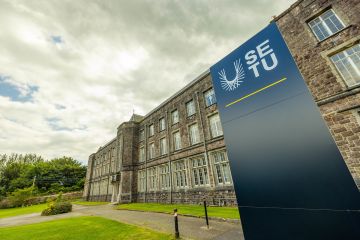
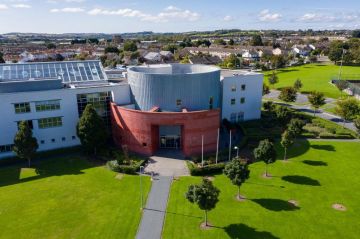
Through inclusive education and high-quality research, South East Technological University drives innovation, empowers communities, and delivers transformative impact for the south east of Ireland.
SETU, as a leading Technological University, will continually elevate and enhance its performance across teaching, research & innovation, and engagement, supported by robust governance, management and operational excellence. In this way, the University will create, enable and sustain the south east as a world-class innovation region and will have transformative impact on our community, our region, and the wider world.
The University of Porto is a public foundation regulated by private law and with statutory, educational, scientific, cultural, administrative, financial, patrimonial and disciplinary autonomy. U.Porto can undertake activities with other national or international entities (public, private or cooperative). The University of Porto can create or participate in associations or societies, for-profit or non-profit, as long as the activities are compatible with its mission.
The University of Porto was officially established on 22 March 1911, shortly after the proclamation of the Portuguese Republic. Its historical roots date back to the 18th century when a combination of training experiences would be transformed into a university.
U.Porto comprises 14 faculties which share a common vision and the same quality standards regarding Education and Research, while keeping in touch with the community. Study medicine and pharmaceutical sciences overlooking the Douro River. Discover the different engineering fields in one of the most modern educational and research institutions in Portugal. Explore the opportunities of veterinary medicine and agriculture while being on the field. Study Architecture in one the most prestigious schools internationally. Or learn to paint surrounded by real landscapes…
U.Porto’s notable evolution in education and research is illustrated by its position in the major international academic rankings, which evaluate the quality of higher education institutions worldwide. In recent years, U.Porto has consolidated its position in leading world rankings, generally ranking among the top 100 European universities and among the top 350 universities in the world. It also stands out in these rankings among the Portuguese higher education institutions with the highest standards and reputation.
